

Vietnam's Logistics Revolution
Forging a New Hub for ASEAN and China
Total Infrastructure Ambition (2021-2030)
National Expressway Target by 2025
New Standard Gauge for China-Rail Connectivity
The Grand Strategy: A Trimodal Nexus
Vietnam is executing a national master plan to become Asia's new logistics powerhouse. The strategy integrates sea, road, and rail to create seamless corridors connecting China's manufacturing centers with ASEAN markets and global shipping routes.
(Yunnan & Guangxi)
(via Cambodia, Laos)
(Direct to EU & North America)
1. Seaports: The International Gateways
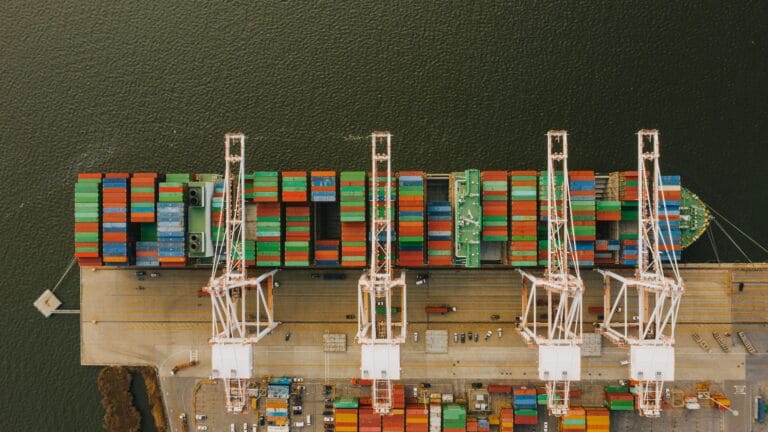
Vietnam is developing "smart" deep-water super-ports to handle the world's largest ships, aiming to become a primary international gateway and transshipment hub, reducing reliance on neighboring hubs.
Port Vessel Capacity (TEU)
New deep-water ports like Cai Mep-Thi Vai can accommodate massive 20,000+ TEU ships, enabling direct, more cost-effective routes to Europe and North America, a significant upgrade from smaller, older ports.
Major Project Investments (Billion USD)
Massive capital is being deployed, led by the $67B North-South High-Speed Rail. Key port and rail links, like the $5.5B Can Gio Port and $8.3B Lao Cai Railway, underscore the scale of this national transformation.
2. Roads: The Domestic & ASEAN Backbone
The centerpiece of Vietnam's land strategy is the Eastern North-South Expressway. This 2,000+ km artery will form an uninterrupted, high-speed backbone for the entire country, integrating domestic markets and connecting to ASEAN.
Expressway Goal (2025)
The government is aggressively pushing to complete 3,000 km of expressways by 2025. This chart shows the significant progress already made, with the goal clearly in sight.
N-S Expressway Connectivity
This expressway is more than a domestic road; it's a strategic corridor. It links directly to China's road network in the north and Cambodia's (via Asian Highway 1) in the south.
3. Railways: The China Connection
Vietnam's old metre-gauge (1,000mm) railways are incompatible with China's 1,435mm standard gauge. The new strategy is to build entirely new, parallel standard-gauge lines, enabling freight trains to cross the border without delay.
A New Standard for Freight
The shift to 1,435mm standard gauge is the most critical part of the northern logistics strategy. It allows for seamless, high-capacity freight movement directly from China's inland provinces to Vietnam's deep-water ports.
"Rail-to-Sea" Freight Corridor
The new $8.3B Lao Cai-Hanoi-Hai Phong railway creates a direct, high-speed "rail-to-sea" link, allowing goods from China's Yunnan province to completely bypass roads and reach global shipping routes.
Related Posts
 The Export Order Flow 01 Dec 2025
 Vietnam Supplier Tier Mapping 28 Nov 2025
 Understanding the OEM, ODM, and OBM… 27 Nov 2025